
 The difference between a mirror that looks like it belongs in a luxury hotel and one that screams “bargain bin” often comes down to a single, invisible detail: how the Aluminum Alloy Mirror Frame until it gleams, but if the joint is weak, the whole piece feels cheap. Let’s cut through the noise and look at the real technical battle: welded versus corner-joined aluminum frames.
First, understand the physics. A welded frame uses heat to fuse the aluminum at the mitered corners. The result is a monolithic structure—essentially one continuous piece of metal. There is no seam, no gap, no reliance on mechanical fasteners. This creates a joint that is stronger than the parent material itself. When you hang a heavy, oversized mirror, that weld is the silent hero. It resists torsion, it handles the thermal expansion of the aluminum, and it never loosens over time. You can drop a welded frame from a workbench and it will dent before the joint fails. That is the kind of over-engineering that sells premium products.
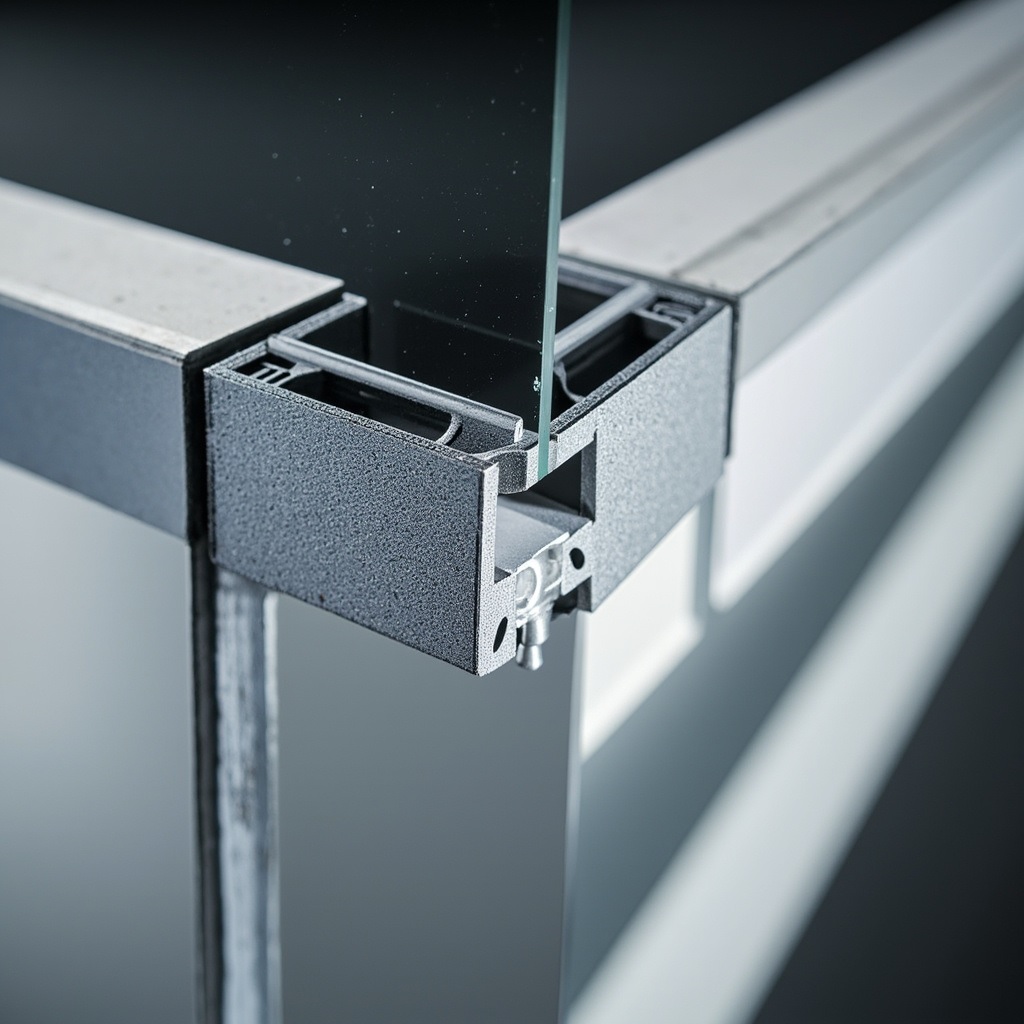
Corner-joined frames, on the other hand, rely on brackets, screws, or hidden clips to hold the mitered ends together. Technically, they work. But “works” is not the same as “excels.” The mechanical connection introduces a point of potential failure. Over months of humidity changes, the screws can back out. The brackets can shift. You will feel it in the mirror’s wobble. Worse, the corner joint leaves a microscopic gap where dust and moisture can creep in, eventually staining the mirror edge. For a high-end retail display or a custom architectural installation, this is a liability you cannot afford.
Now, let’s talk about aesthetics. Welding allows for a seamless, invisible corner. A skilled welder can grind and polish the joint so it disappears entirely. The frame looks like it was carved from a single block of aluminum. This is critical for modern, minimalist designs where the line of the frame must be uninterrupted. Corner-joined frames, no matter how tight the fit, always have a visible seam. Even the best hidden bracket leaves a faint line. In a well-lit showroom, that line screams “assembly required.” It breaks the illusion of solidity.
From a marketing perspective, the welded frame is your premium story. It is the difference between a product you sell on price and a product you sell on craftsmanship. When a customer runs their finger over a welded corner, they feel the smoothness. They do not know the technical term, but they know it feels better. That tactile feedback translates directly into perceived value. You can charge 20-30% more for a welded frame and justify it with a single sentence: “This frame will never come apart.”
Corner-joined frames have their place. They are cheaper to produce, easier to ship flat, and allow for quick field adjustments. For budget-conscious projects or temporary installations, they are a functional choice. But if you are positioning your mirrors as durable, high-end, or architectural-grade, the decision is clear. Welding is not just a production method; it is a statement. It says we trust our product to hold up under real-world stress. It says we refuse to cut corners on the corners.
So when you spec your next aluminum mirror frame, ask yourself one question: Do you want a joint that is merely connected, or one that is fused? The answer will define your entire product line.