
A Technical Comparison of Welded vs. Corner-Joined Aluminum Mirror Frames
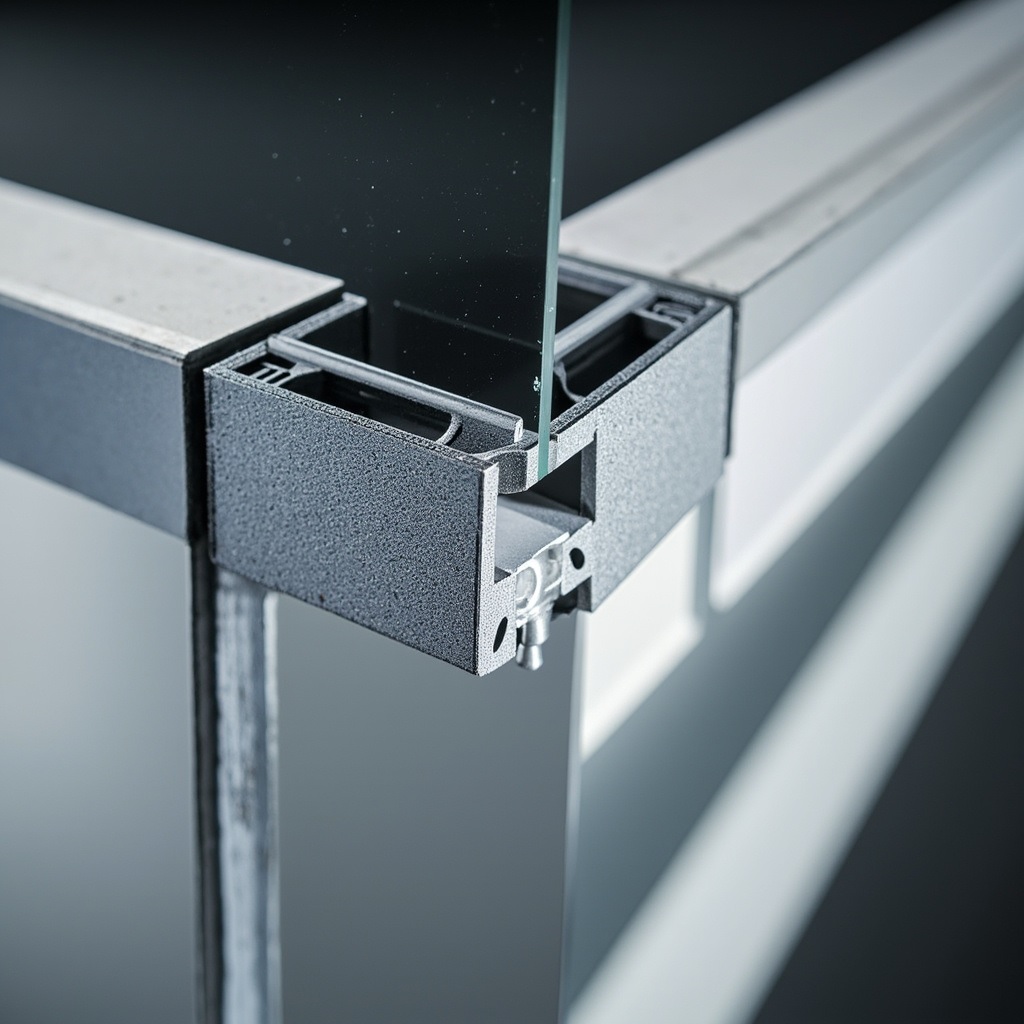 The difference between a mirror that looks like it belongs in a luxury hotel and one that screams “bargain bin” often comes down to a single, invisible detail: how the Aluminum Alloy Mirror Frame until it gleams, but if the joint is weak, the whole piece feels cheap. Let’s cut through the noise and look at the real technical battle: welded versus corner-joined aluminum frames.
First, understand the physics. A welded frame uses heat to fuse the aluminum at the mitered corners. The result is a monolithic structure—essentially one continuous piece of metal. There is no seam, no gap, no reliance on mechanical fasteners. This creates a joint that is stronger than the parent material itself. When you hang a heavy, oversized mirror, that weld is the silent hero. It resists torsion, it handles the thermal expansion of the aluminum, and it never loosens over time. You can drop a welded frame from a workbench and it will dent before the joint fails. That is the kind of over-engineering that sells premium products.
Corner-joined frames, on the other hand, rely on brackets, screws, or hidden clips to hold the mitered ends together. Technically, they work. But “works” is not the same as “excels.” The mechanical connection introduces a point of potential failure. Over months of humidity changes, the screws can back out. The brackets can shift. You will feel it in the mirror’s wobble. Worse, the corner joint leaves a microscopic gap where dust and moisture can creep in, eventually staining the mirror edge. For a high-end retail display or a custom architectural installation, this is a liability you cannot afford.
Now, let’s talk about aesthetics. Welding allows for a seamless, invisible corner. A skilled welder can grind and polish the joint so it disappears entirely. The frame looks like it was carved from a single block of aluminum. This is critical for modern, minimalist designs where the line of the frame must be uninterrupted. Corner-joined frames, no matter how tight the fit, always have a visible seam. Even the best hidden bracket leaves a faint line. In a well-lit showroom, that line screams “assembly required.” It breaks the illusion of solidity.
From a marketing perspective, the welded frame is your premium story. It is the difference between a product you sell on price and a product you sell on craftsmanship. When a customer runs their finger over a welded corner, they feel the smoothness. They do not know the technical term, but they know it feels better. That tactile feedback translates directly into perceived value. You can charge 20-30% more for a welded frame and justify it with a single sentence: “This frame will never come apart.”
Corner-joined frames have their place. They are cheaper to produce, easier to ship flat, and allow for quick field adjustments. For budget-conscious projects or temporary installations, they are a functional choice. But if you are positioning your mirrors as durable, high-end, or architectural-grade, the decision is clear. Welding is not just a production method; it is a statement. It says we trust our product to hold up under real-world stress. It says we refuse to cut corners on the corners.
So when you spec your next aluminum mirror frame, ask yourself one question: Do you want a joint that is merely connected, or one that is fused? The answer will define your entire product line.
Metal Business Kards: the premium alternative to paper (and when they’re actually worth it)
Paper business cards are everywhere. That’s the problem.
If you’re trying to signal precision, premium positioning, or “I’m not playing small,” metal cards do something paper simply can’t: they create a physical moment. You hand it over and people pause. That pause is branding.
Now, metal isn’t magic. It’s a tool. A pricey one. And if your brand doesn’t back up the promise, a metal card can feel like a costume.
Hot take: most people don’t need metal cards
But the people who do need them should stop pretending paper is “fine.”
If your work lives or dies on trust, perceived competence, and exclusivity, think founders, consultants, real estate, private finance, high-end services, metal can be the cheapest “premium signal” you’ll ever buy. Not because it’s cheap. Because the perception lift can be disproportionate.
One-line truth:
Metal cards don’t just share contact info. They negotiate status.
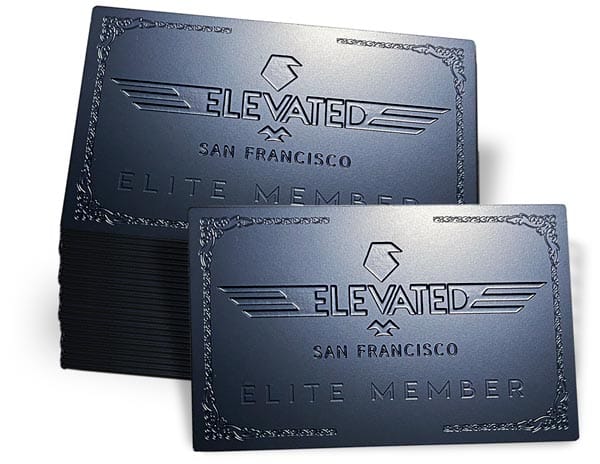
The real question: what are you buying, durability, or narrative?
Here’s the specialist view. When you switch materials, you’re not just switching substrates; you’re changing the way your brand is processed by the brain: weight, temperature, reflectivity, edge finish, even sound when it hits the table. That’s sensory branding, and it’s real.
Look, paper wins on convenience. metal business kards win on presence.
A quick contrast that actually matters in the field:
– Paper: light, flexible, easy to forget, easy to damage
– Metal: rigid, heavier, hard to destroy, hard to ignore
And yes, the “ignore” part is the point.
Durability: paper loses this fight fast
Paper creases. Corners fray. Ink rubs. Lamination helps, but then you’re still handing out something that feels like… lamination.
Metal, done right, doesn’t degrade in normal use. In my experience, a clean etched or laser-marked card stays readable after months of wallet abuse. That means your brand stays intact long after the event where you met.
One caveat (because there’s always one): cheap metal cards scratch badly, and fingerprints can get gross on high-polish finishes. If you’re going metal, don’t sabotage yourself with mirror chrome unless you like smudges.
Design: don’t overdo it, you’ll ruin the flex
Personalization is where metal cards can either look surgical and elite… or like a novelty item from a mall kiosk.
If you want the premium effect, hierarchy has to be ruthless. Fewer elements. Strong contrast. Legibility that survives poor lighting and quick glances.
A small set of customizations usually lands best:
– Deboss or emboss for tactile hierarchy (name/logo gets the “touch priority”)
– Brushed finishes for scratch forgiveness and understated luxury
– Black anodized aluminum for modern, high-contrast minimalism
– Edge finishing (chamfered or rounded) so it feels intentional, not sharp or unfinished
Here’s the thing: metal already screams “premium.” You don’t need to shout with gradients, tiny icons, five fonts, and a QR code the size of a postage stamp.
Sustainability (yes, it matters, and no, it’s not just virtue signaling)
Metal cards tend to be kept longer. That changes the lifecycle math.
A paper card might get tossed the same day. A metal card often becomes a “keeper,” which reduces replacement cycles and waste, assuming you’re not redesigning every quarter like a startup with commitment issues.
A useful datapoint: the average American reportedly receives about 12 business cards per week, and a large share are discarded within days. Source: Adobe / Survey data reported via Adobe blog and industry coverage (commonly cited in print marketing discussions). The exact discard rate varies by study, but the behavior pattern is consistent: paper is disposable.
If sustainability is part of your brand story, metal can support it, but only if you also behave sustainably (fewer reprints, smarter distribution, don’t hand them out like flyers).
Professional image: the part people won’t admit is working
Metal changes how you’re perceived before you speak. That’s why it can be so effective in high-stakes rooms.
I’ve watched metal cards do two things reliably:
- Buy you a second look (people rotate it, feel it, ask about it)
- Frame you as higher-tier (not always “better,” but “premium,” which is different)
If your positioning is budget-friendly, ultra-approachable, or mass-market, metal can create a weird mismatch. It’s like showing up to a casual meetup in a tux. Technically impressive. Socially confusing.
ROI and pricing: do the math like a grown-up
Metal cards cost more upfront. That’s obvious. The smarter question is whether they reduce cost per meaningful connection.
Think in total cost of ownership terms:
– Unit cost (material + finish + engraving/printing)
– Shipping (weight matters)
– Replacement cadence (role changes, phone number changes, rebrands)
– Opportunity value (meetings booked, referrals triggered, deals influenced)
Now, this won’t apply to everyone, but: if one card helps close a single deal you almost lost on trust or differentiation, the ROI conversation is basically over.
Also, don’t ignore operational friction. If you’re constantly updating titles, adding team members, or experimenting with offers, paper is agile. Metal is stubborn.
Quick guide: ordering metal cards without production surprises
Some of this is boring. It’s also where people mess up.
Files and specs that reduce headaches:
– Use vector artwork (AI/SVG/PDF), not a fuzzy PNG
– Keep text sizes sane (metal engraving can fill in if you go micro-thin)
– Confirm safe zones and edge tolerances, especially if you’re doing cutouts
– Ask for a proof that reflects finish behavior (matte vs gloss changes everything)
And please test readability. Black on dark gunmetal looks incredible… until you’re standing in a dim conference hallway.
When metal cards shine (and when they don’t)
Metal is best used like a precision instrument, not a mass-distribution tool.
They shine in:
– Private meetings where the exchange is deliberate
– High-ticket sales where perceived reliability is currency
– Conferences where you need a physical differentiator
– Luxury, tech, design, finance, and specialist service categories
They’re a poor fit for:
– Street marketing or high-volume lead gen
– Teams with frequent personnel changes
– Brands built on casualness and low-friction simplicity
One more opinionated note: metal cards work even better when you don’t give them to everyone. Scarcity makes the object feel chosen, not spammed.
A practical way to decide in 60 seconds
Ask yourself two questions:
1) Will my audience keep this?
If yes, metal starts making sense.
2) Does my brand promise match the signal?
If you hand someone a metal card and then deliver a flimsy experience, you’ve created negative contrast. That’s worse than paper.
If the answers line up, metal business kards aren’t a gimmick. They’re a compact, tactile credibility play. And honestly, in crowded markets, credibility is the whole game.